

Second Batch of Wild Buffaloes Sent from Kaziranga’s Agoratoli Range to Kanha Tiger Reserve, Madhya Pradesh – Total of 8 Translocated So Far.
 Aiidesh News
May 6, 2026 03:49
259
0
Aiidesh News
May 6, 2026 03:49
259
0
Aiidesh News : 6 April - 2026 :
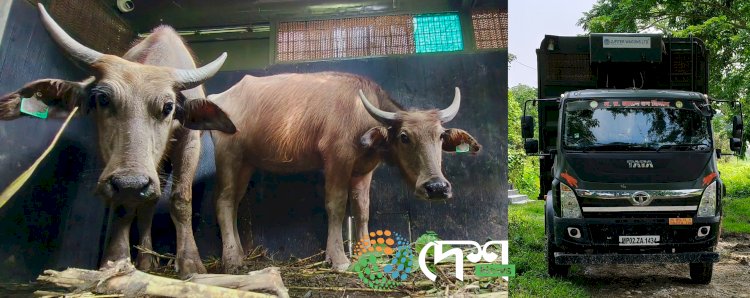
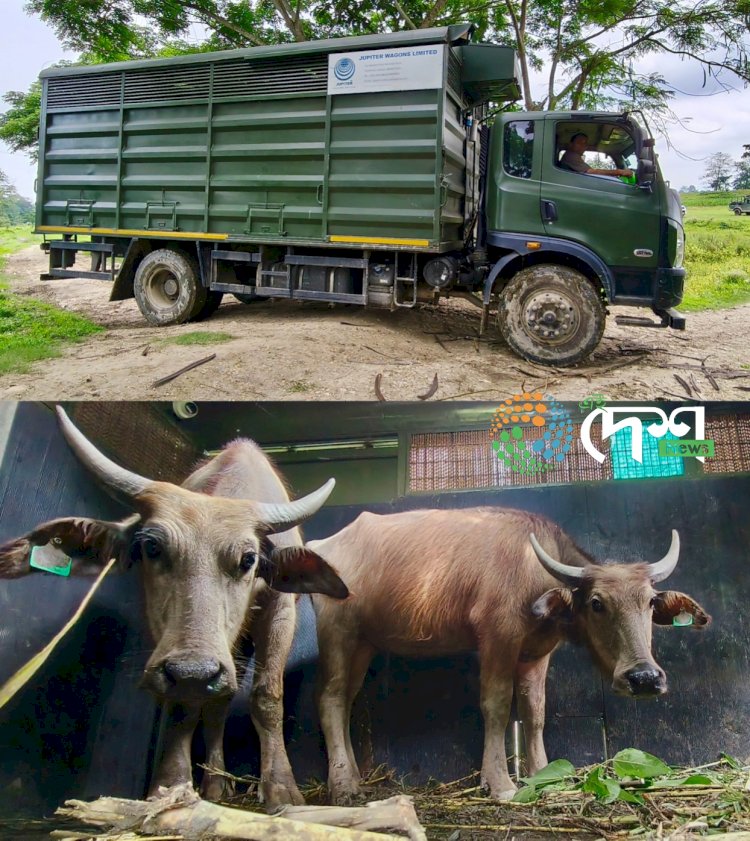
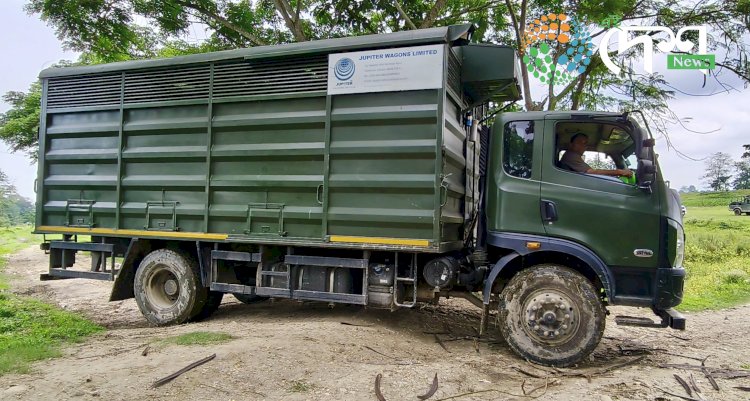
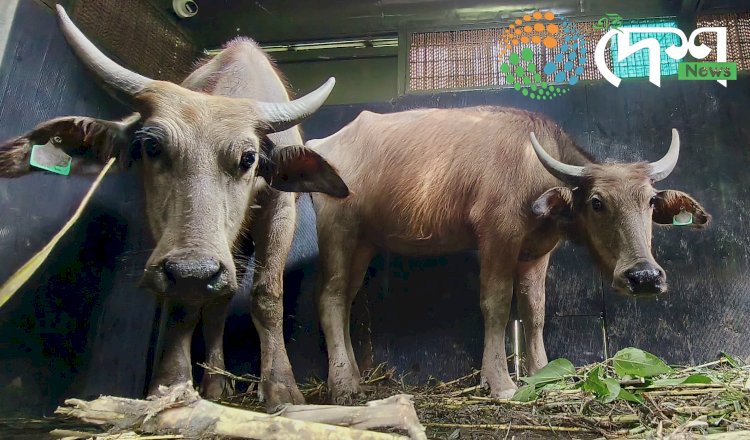
Under the bilateral agreement signed between the Assam and Madhya Pradesh Forest Departments earlier this year, four more Asiatic wild buffaloes were translocated this morning from the Agoratoli forest range of Kaziranga National Park and Tiger Reserve to Kanha Tiger Reserve in Madhya Pradesh for reintroduction.
Earlier, on April 25, four wild buffaloes had been sent from Kaziranga’s Kohora range to Kanha. With today’s batch, a total of eight wild buffaloes have now been translocated from Kaziranga to Kanha.
This morning, three females and one male buffalo were dispatched from near the King Cobra forest camp in Agoratoli, in the presence of Kaziranga DFO Arun Vighnesh, ACF Chakrapani Roy, Kanha ACF Ajay Thakur, ACF Bidyut Bikash Bora, Range Officer Himanshu Gogoi, and two appointed observers.
Veterinarians Dr. Saurav Burhagohain (Kaziranga) and Dr. Mehdi Hasan (Wildlife Rescue and Rehabilitation Centre, Borjuri, Bokakhat) accompanied the animals. The buffaloes are expected to reach Kanha after a journey of 80–90 hours by truck.
According to the bilateral agreement, a total of 50 Asiatic wild buffaloes will be sent from Kaziranga to Kanha in phases. So far, 8 have been translocated in two rounds. In future, Assam Forest Department plans to send 20 buffaloes annually.
DFO Arun Vighnesh stated that after today’s release, the capture operations will be paused during the monsoon. The four buffaloes sent today had been kept under observation for 21 days in Agoratoli before departure. The earlier batch sent on April 25 is currently under monitoring in Kanha.
Ajay Thakur, ACF of Kanha Tiger Reserve, informed Dainik Asom that the Central Zoo Authority, Wildlife Institute of India, and National Tiger Conservation Authority are jointly monitoring the reintroduced buffaloes. He added that despite the long truck journey, no signs of stress were observed in the animals.
Scientifically known as Bubalus arnee, the Asiatic wild buffalo has one of its largest populations in Kaziranga National Park. Once abundant in Dibru-Saikhowa and Manas National Parks, the species has become critically endangered there. The latest forest survey estimates Kaziranga’s population at around 1,660 individuals.
Globally, the Asiatic wild buffalo population is less than 4,000. The species went extinct in Madhya Pradesh in 1979, though it once thrived in Mandla, Balaghat, and Satpura forests. As per the agreement, Assam will send 50 wild buffaloes, one rhino, and three bar-headed geese to Madhya Pradesh. In return, Madhya Pradesh will provide Assam with three tigers and six gharials.
**********





































![Bharat Diamond Bourse [BDB] Rises to fight the COVID-19 Threat](https://aiidesh.news/uploads/images/image_380x226_5ead10b817dde.jpg)