
India’s first satellite-tagged Ganges softshell turtle released at Kaziranga National and Tiger Reserve.
 Aiidesh News
May 15, 2026 08:42
263
0
Aiidesh News
May 15, 2026 08:42
263
0
Aiidesh News : 15 May - 2026 :
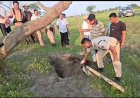
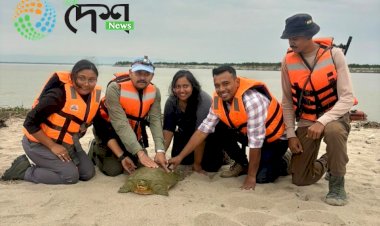
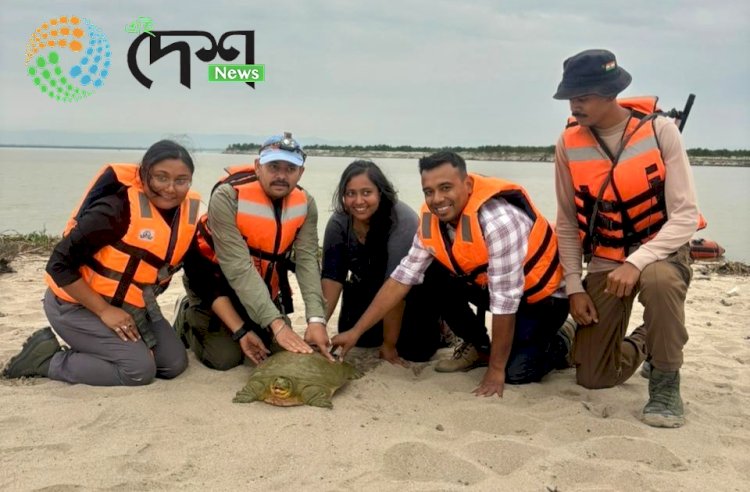
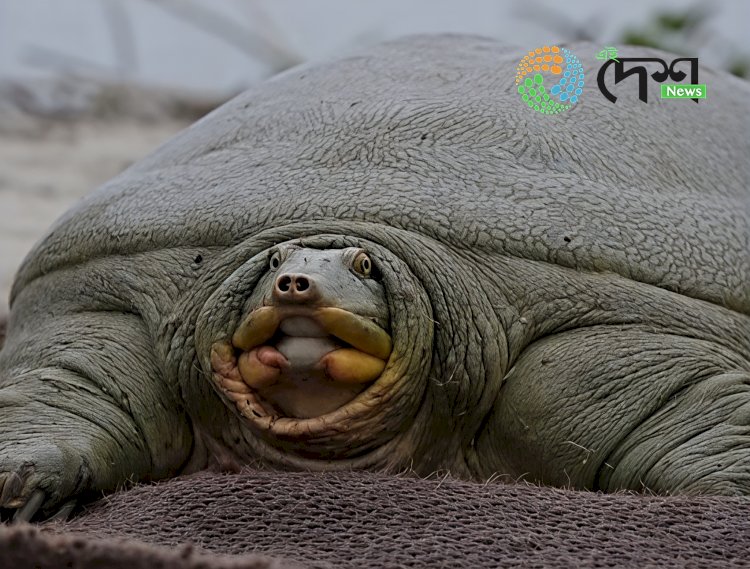
Specialists at the Biswanath Wildlife Division of Kaziranga National Park and Tiger Reserve are elated after successfully receiving satellite signals from a softshell turtle released with a high-tech tracking device. This turtle, belonging to the Ganga species, was captured at the confluence of the Brahmaputra and Borgang rivers in the Kathnibari area of Kaziranga’s Sixth Addition by scientists and researchers of the Wildlife Institute of India (WII), Dehradun, with the support of Kaziranga National Park authorities.
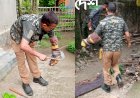
On April 28, the turtle was fitted with a satellite-linked device and released back at the same location. The technology now enables researchers to monitor its behavior, migration, and habitat in detail, marking a breakthrough in turtle conservation studies. This is the first time in India such a satellite-linked turtle restoration project has been implemented, led by WII under Dr. Abhijit Das.
The successful satellite signal received today coincides with World Endangered Species Day, making the achievement historic. Assam Chief Minister Dr. Himanta Biswa Sarma celebrated the moment on social media, calling it “a proud moment for Assam, as we remain committed to protecting every species in our forests.”
The Brahmaputra Valley is one of the world’s most important regions for riverine turtle conservation. Assam hosts 21 turtle species, making it a biodiversity hotspot in Asia. Of the 8 softshell turtle species found in India, 5 occur only in Kaziranga, highlighting its global importance. According to Dr. Abhijit Das, identifying seasonal migration, habitat range, and breeding grounds is vital for active management of softshell turtles in the Brahmaputra Valley.
This Project Implementation led by the Wildlife Institute of India, Dehradun. Supported by the Ministry of Environment, Forest and Climate Change. Collaboration with Assam Forest Department and Kaziranga authorities. Financial backing from the National Geographic Society. From today, experts will regularly monitor the turtle’s movements via satellite.
********